
Last Asylum: Plague review
 Analysis by GetAllApps
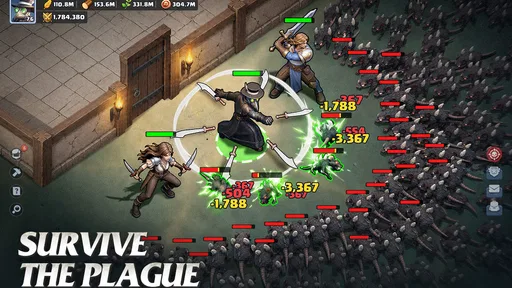
I usually judge a strategy game by what it asks me to care about in the first few minutes, and Last Asylum: Plague makes its central concern easy to understand: a sanctuary is in trouble, and a doctor is part of the effort to keep it going. That gives the game a more human starting point than a strategy title built only around territory or battles. The premise suggests urgency, but the appeal depends on whether its goals and pace keep that urgency from turning into a chore.
Developed by 37GAMES GLOBAL, this free strategy game is aimed at players who enjoy building toward a larger objective rather than finishing a self-contained match. Its Teen age rating is worth noting for families choosing games, while the straightforward premise makes it easy to grasp even if you are not usually drawn to elaborate strategy games. I would approach it as an ongoing commitment, not as a quick puzzle with a neat endpoint.
What the first goals ask of you
The sanctuary-and-doctor premise gives the opening a clear emotional frame: the place needs attention, and the doctor represents a last opportunity to respond. That is more memorable than a string of abstract instructions. It also gives newcomers a useful question to keep in mind as they play: which actions help stabilize the sanctuary, and which merely move a progress marker?
I find that distinction important in strategy games. Early objectives work best when they teach a player how to think, not just where to tap. With this setup, I would take a moment to read each new task before acting, especially if it unlocks another part of the experience. Treating goals as a sequence of priorities, rather than clicking through them as fast as possible, makes the opening easier to follow and helps prevent wasted effort.
The game’s short store description, “Last Asylum,” leaves the details to the experience itself, so the premise is the clearest guide to its tone. It points toward survival and care without requiring a player to arrive with genre knowledge. If you enjoy strategy but dislike being dropped into a complicated setting with no obvious purpose, that simplicity is a welcome starting point.
One practical approach is to play the opening in focused sessions. Finish the current objective, check what it changed, and then decide whether to continue. That small pause helps reveal whether a task is teaching a useful loop or simply extending the checklist. It is also a good way to keep a game with ongoing progression from swallowing more time than you intended.
Reading progress without rushing
Progress in a strategy game is most satisfying when it is visible in more than a number. Here, the sanctuary provides a natural lens for judging advancement: does a task make the central situation feel more secure, or does it mainly unlock another obligation? I recommend paying attention to the connection between a goal and the larger premise. When that connection is clear, the next step feels purposeful; when it is faint, the game can start to feel like work.
Unlocks can be motivating, but the strongest ones change how I plan. A new option is more valuable when it gives me a meaningful choice or makes a previously awkward decision easier. If a reward only adds another thing to manage, I would be cautious about treating it as progress in itself. This is a useful way to assess the game’s rhythm without mistaking a longer list of tasks for deeper strategy.
For a newcomer, I would keep a simple mental note of what each objective contributes. That does not mean making a spreadsheet or optimizing every move. It just means noticing whether an action helps the sanctuary, supports the doctor’s role, or opens a path that matters later. The habit can make the game easier to understand and can also reveal when you are repeating actions without a clear reason.
That approach is particularly useful if you play in short bursts. When you return after a break, the last completed goal and the next visible objective are better anchors than trying to remember every detail. I would avoid beginning a session by tapping through everything on screen; first identify the current priority, then decide how much time you want to give it.
Challenge, pacing, and the cost of persistence
The central challenge suggested by the premise is not simply to make progress, but to keep a fragile situation moving in the right direction. That can create satisfying tension when choices have consequences. It can also become tiring if the game repeatedly asks for attention without offering a fresh decision. My advice is to judge the difficulty by how often you have to reconsider your plan, not just by whether the next objective takes longer.
When a goal feels harder than expected, resist the urge to spend immediately. Take a look at what the game is asking you to accomplish and whether an earlier task or unlock could make it more manageable. This is a broadly useful strategy habit, and it matters even more in a free game with optional purchases. Slowing down before paying keeps a moment of friction from becoming an impulse buy.
The pacing also determines whether the game fits into everyday life. If I had a few minutes while waiting for an appointment, I would use that time to review the current objective and complete a small, clear step rather than start a long run of progression. At home, with more time, I would explore how the next unlock affects the overall plan. Separating those two kinds of sessions makes it easier to enjoy the game without feeling that every visit has to be substantial.
That everyday scenario points to a limitation: players who want a strategy game that can be fully enjoyed in one sitting may find an ongoing sanctuary premise less satisfying. The design sounds better suited to gradual involvement than to a compact campaign with a fixed finish. If you prefer a clean beginning and ending, a turn-based tactics game or a self-contained puzzle strategy title may suit you better.
What keeps me coming back—and what can wear thin
Retention depends on whether the game gives me a reason to return beyond the fact that something remains unfinished. The doctor and sanctuary provide a coherent reason to care, but a strong premise cannot carry every session by itself. I would look for a satisfying link between what I do now and what becomes possible next. If that link remains visible, small tasks can add up to a rewarding arc; if it gets lost, logging in can feel like maintenance.
There is a trade-off in gradual progression. It lets a player make steady headway without needing to master everything at once, but it can also make the route forward feel segmented. Players who enjoy checking off objectives may appreciate that cadence. Those who want constant strategic surprises or a brisk escalation of difficulty may have less patience for it.
Purchases are optional, and the game is free to download, but in-app items range from $0.99 to $99.99 each. That wide span is a reason to set a personal spending limit before playing, not a reason to assume that payment is required. I would first see how the ordinary pace feels and only consider buying something if it solves a specific frustration I have identified. If the main appeal is making choices under pressure, paying to skip the pressure may even reduce the part you enjoy.
This is also where it differs from many quick-play strategy alternatives. A short tactical game tends to place the challenge inside a single match: plan, adapt, and see the result soon. Last Asylum instead invites attention to a continuing central project. I would choose it for a sense of gradual responsibility, and choose a match-based strategy game when I want an immediate test of skill with a clear end to the session.
Who should give it a chance
I can see this working well for players who like a visible long-term objective, prefer to make progress in manageable steps, and enjoy the idea of protecting a central refuge rather than simply chasing a high score. It may also suit someone curious about strategy games who wants an accessible premise to hold onto while learning how the experience is organized.
I would be more hesitant to recommend it to a player who dislikes recurring goals, feels pressured by optional spending, or wants every session to deliver a major strategic twist. The same goes for anyone looking for a purely competitive experience: the sanctuary-focused framing is a different kind of attraction. If you want a game that can be put down indefinitely without leaving a sense of unfinished business, a self-contained strategy title is likely a safer choice.
The game has an average rating of 4.4 from around 373,000 ratings, with over 10 million installs. Those figures indicate that it has reached a broad audience, though popularity alone does not tell me whether its ongoing pace will suit you. I would use them as context, then make the decision based on whether the sanctuary premise and steady-goal structure sound appealing.
My verdict on its progression
Last Asylum: Plague has a clear advantage in the way its premise gives strategy a human center. Its best route to lasting appeal is a progression loop where each goal feels connected to the sanctuary’s survival, rather than a set of unrelated chores. I would play attentively at first, give new unlocks time to prove their value, and avoid spending just to push past a moment of impatience.
The current version is 1.0.106, and it supports Android 7.0 or later. That makes the minimum software requirement easy to check before installing, while the free entry point lets you try the basic experience without an upfront purchase. The developer, 37GAMES GLOBAL, positions it squarely as a strategy game, but its appeal is more specific than the category label: it is for people who want to tend a continuing crisis rather than solve one isolated challenge.
For me, the deciding question is whether returning to the sanctuary feels like continuing a story of purposeful decisions or merely clearing another queue of tasks. If the former sounds satisfying, this is worth trying. If you need fast, self-contained matches or dislike long-running progression, I would pick a different strategy game. That is a fair trade-off for a title whose strongest hook is the sense that each small decision belongs to a larger effort.
Pros and cons
Pros
- Short sessions make it easy to check in between other activities.
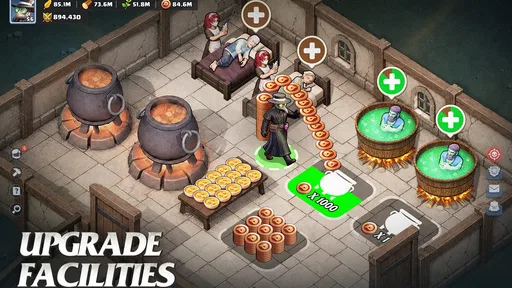
- Base upgrades provide a clear sense of long-term progress.
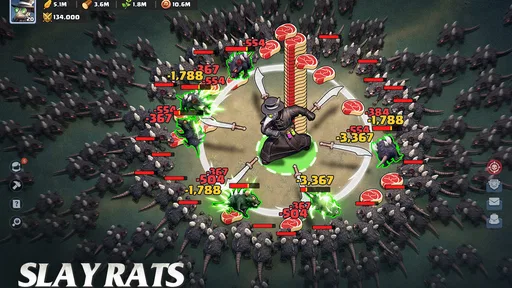
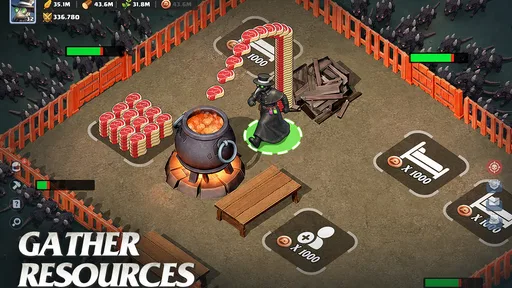
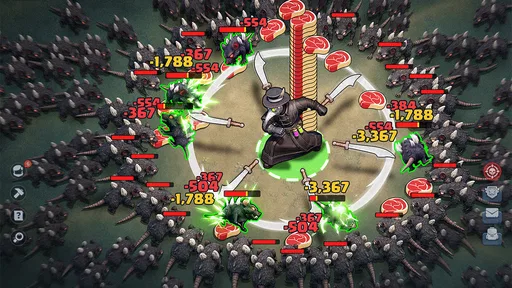
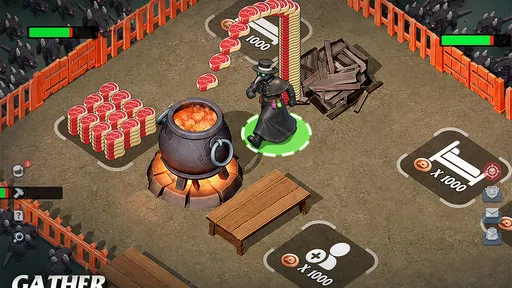
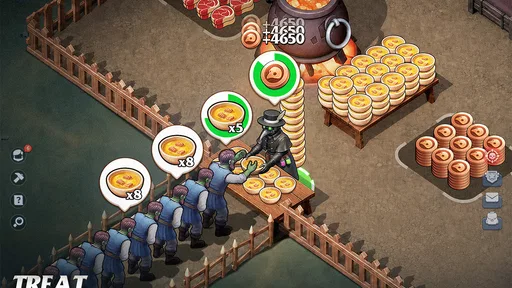
- Resource management adds strategy beyond simple combat.
- The plague setting gives the game a distinct atmosphere.
- Regular goals can offer direction when deciding what to do next.
Cons
- Progress may slow when upgrade materials become scarce.
- Waiting for timers can interrupt the pace of play.
- Frequent check-ins may be needed to keep development moving.
- Some players may find the repeated management tasks monotonous.
- Online features may limit play when the connection is unreliable.


